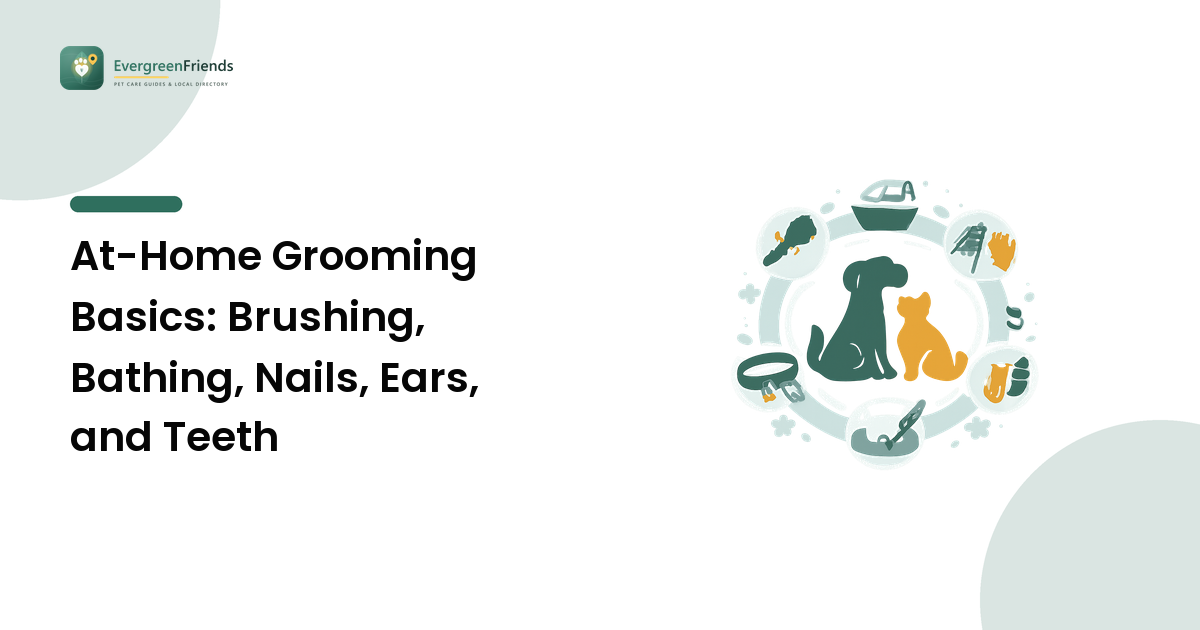
Grooming has a reputation as the fussy, optional part of pet care — the spa stuff — and that framing gets a lot of owners into trouble. Brushing, nail trims, and a look inside the ears aren't about appearances. They're maintenance that keeps a coat comfortable, catches small problems while they're still small, and, done calmly from the start, becomes a few unremarkable minutes you both stop thinking about. The dog that hates the clippers and the cat that turns into a windmill at bath time are almost always animals that met grooming late, roughly, or only in a crisis.
The good news: most grooming is genuinely a home job, and the equipment is cheap. This guide walks through the whole routine — coat, bath, nails, ears, teeth — for both dogs and cats, with honest guidance on the one thing that matters most: when to stop and book a professional instead of pushing on. One note before we start, and it holds for the whole article: everything here is general pet-care information, not veterinary advice. Anything that looks like a skin problem, an infection, or pain is a conversation for your vet, not a home fix.
Start with the coat: brushing is the foundation
If you only do one grooming task consistently, make it brushing. Regular brushing removes loose hair before it mats or ends up on your sofa, spreads the skin's natural oils through the coat, and — because your hands are on the animal every few days — turns you into the person most likely to notice a new lump, a flea, or a sore patch early. It also makes every other grooming task easier, because a pet that's used to being handled calmly doesn't panic at the nail clippers.
How often depends almost entirely on coat type, not species. Here's the honest picture:
| Coat type | Typical examples | Brushing rhythm | Notes |
|---|---|---|---|
| Short, smooth | Beagle, Boxer, most short-haired cats | Once a week | Still sheds more than people expect; a rubber curry brush lifts loose hair |
| Double coat | Labrador, Husky, German Shepherd | 2–3 times a week; daily in shedding season | "Blows" coat heavily spring and autumn — never shave a double coat |
| Long / silky | Maine Coon, Persian, Yorkshire Terrier | Most days | Mats form fast behind ears, under legs, and on the belly |
| Curly / non-shedding | Poodle, Bichon, many doodle mixes | Every day, to the skin | Traps shed hair inside the coat; needs professional clipping every few weeks |
Two principles cut across all of them. First, brush all the way to the skin, not just over the top — mats form underneath, where a surface brush glides right past them. Second, work with the coat's direction and stop the moment you hit resistance, so brushing never becomes something to dread. Coat care is also the most underestimated cost in pet ownership, in both time and money; if you're still deciding on a pet, choosing a breed whose grooming load matches your real week saves far more hassle than any tool.
A word on mats
A mat is a tight knot of tangled hair pulling on the skin, and it's genuinely uncomfortable — it can hide sores and, once it's tight to the body, it traps moisture and traps you. Loose tangles can be teased apart with your fingers and a comb; a mat that's flat against the skin should go to a groomer or vet, not a pair of household scissors. Cutting blind into a mat is one of the most common ways owners accidentally cut skin, because you can't see where the coat ends and the pet begins.
Bathing: less often than you'd think
Here's the surprise for most owners: healthy pets need bathing far less than the pet-aisle marketing implies. Over-bathing strips the coat's protective oils and can leave skin dry and itchy — the opposite of the goal.
Most dogs need a bath somewhere between every few weeks and every few months, depending on coat, lifestyle, and how muddy they get; a house dog with a smooth coat can go a good while between proper baths. Cats, famously, groom themselves and rarely need bathing at all — an indoor cat may go its whole life without one. Bathe when the pet is genuinely dirty or smelly, not on a rigid calendar.
When you do bathe, a calm sequence beats a fast one:
- Brush first. Always brush out loose hair and tangles before water touches the coat — water tightens tangles into mats.
- Use lukewarm water and a pet-specific shampoo. Human and baby shampoos are the wrong pH for pet skin. Test the water on your own wrist first.
- Protect the ears and eyes. Keep water out of the ear canals (a cotton ball just inside the ear helps) and avoid the eyes entirely.
- Rinse twice as long as you think you need to. Leftover shampoo is a leading cause of post-bath itching.
- Dry thoroughly and warmly. Towel well; for thick coats, a dryer on a low, cool setting prevents a damp, chilled pet. Make the whole thing pleasant with a few treats and a light voice.
If your pet finds baths genuinely terrifying despite a gentle approach, that's a strong reason to let a professional groomer handle the occasional deep clean — it's safer for everyone and worth the money.
Nail trims: the task owners dread, made simple
Overgrown nails aren't cosmetic. Left too long, they change how a dog stands and walks, can splay the toes, and in extreme cases curl back into the pad. If you can hear a dog's nails clicking on a hard floor, they're due. Indoor cats need their claw tips taken off every few weeks too, since they don't wear them down outdoors.
The thing everyone fears is the quick — the pink strip of blood vessel and nerve inside the nail. Cut into it and it hurts and bleeds. The whole trick is to avoid it:
- On pale nails, the quick is the visible pink core; stay well clear of it and only take off the hooked tip.
- On dark nails you can't see it, so take off tiny slivers at a time. When the cut surface shows a small dark dot in the centre, stop — you're close.
- Trim little and often rather than a big cut every couple of months. Frequent small trims also cause the quick to recede over time, giving you more margin.
- Keep styptic powder (or, in a pinch, cornflour) on hand to stop a bleed if you nick the quick. It happens to everyone eventually; a dab of powder and a calm voice and you move on.
For a nervous pet, the fastest route to easy trims is desensitising: handle the paws daily with no clipper in sight, pair the clipper's appearance with a treat, and trim a single nail some days rather than all of them at once. Slow is fast here.
Ears and teeth: the quiet essentials
Ears. Check them weekly during a brush. A healthy ear is pale pink, clean, and neutral-smelling. Wipe only the visible outer part with a pet ear cleaner on a cotton ball or pad — never push a cotton bud down into the canal, which packs debris in and can injure the eardrum. Floppy-eared and hairy-eared breeds trap more moisture and need a closer look. And here's the firm line: redness, a strong or yeasty smell, dark discharge, or a pet shaking its head and scratching at an ear is a likely infection and a vet visit, not something to clean away at home.
Teeth. Dental disease is one of the most common and most under-treated health issues in both dogs and cats, and it's largely preventable. The gold standard is brushing with a pet-safe toothpaste (never human toothpaste — some contain xylitol, which is toxic to dogs) a few times a week, introduced gradually so it's a game, not a wrestling match. Dental chews and vet-checked dental diets help as a supplement, not a replacement. Bad breath that lingers, red or bleeding gums, or a pet dropping food is a reason to book a dental check.
Where home grooming stops and a professional starts
A good groomer is worth the money in specific, honest situations — not as an admission of failure, but as the right tool:
- Coats that need clipping. Poodles, doodles, and many terriers need scissoring or clipping to a breed pattern that's genuinely hard to do well at home.
- Tight matting. Mats flat against the skin are a groomer's or vet's job; de-matting a heavily knotted coat safely is skilled work.
- Nail trims you can't safely manage. A strong, panicking dog or a cat with an owner who's understandably nervous is safer in experienced hands.
- The occasional deep clean of a heavy-shedding double coat, especially during a big seasonal blow-out.
None of that removes the daily brush and the weekly check from your list — those stay home, and they're what keep the professional visits short and cheap. Grooming, like the rest of pet care, rewards a steady routine over heroics; it slots naturally alongside the everyday dog care routine and the everyday cat care routine, and if you've just brought a pet home, gentle handling from week one is covered in bringing home a new puppy or kitten.
Frequently asked questions
How often should I brush my dog or cat?
It depends on the coat, not the species. Short smooth coats need a weekly brush; double coats want two to three sessions a week and daily brushing during seasonal shedding; long, silky coats need brushing most days; and curly non-shedding coats like Poodles and doodles need daily brushing to the skin plus professional clipping every few weeks. When in doubt, brush more often — it's rarely a problem to overdo.
How often should I bathe my pet?
Less often than most people assume. Over-bathing strips natural oils and dries the skin. Most dogs are fine somewhere between every few weeks and every few months, based on how dirty they actually get, while most cats groom themselves and rarely need a bath at all. Bathe when your pet is genuinely dirty or smelly rather than on a fixed schedule, and always brush before the bath.
What do I do if I cut the nail too short and it bleeds?
Stay calm — it looks worse than it is, and it happens to nearly everyone. Press styptic powder (or cornflour as a stand-in) onto the nail tip to stop the bleeding, keep your pet calm and still for a minute, and skip the rest of that paw for the day. Trimming little and often, and only taking the very tip off dark nails, is how you avoid it next time.
Can I use human shampoo or toothpaste on my pet?
No to both. Human and baby shampoos are the wrong pH for pet skin and can leave it dry and itchy — use a pet-specific shampoo. Human toothpaste is worse: some brands contain xylitol, which is toxic to dogs. Always use a toothpaste made for pets, which is also designed to be swallowed safely.
When should I stop and call the vet instead of grooming?
Grooming handles routine upkeep, not health problems. Book a vet — not a groomer, and not a home remedy — for red, smelly, or discharging ears, head-shaking and ear-scratching, bald patches, scabs, raw or irritated skin, persistent bad breath or bleeding gums, or any lump or sore you find while brushing. Finding these things early is one of the best reasons to groom regularly in the first place.
A calm grooming routine is one of the quiet pleasures of living with a dog or cat — a few unremarkable minutes that keep them comfortable and keep you in the loop on their health. Build it gently, keep it regular, and lean on a professional for the jobs that genuinely need one. For step-by-step care guides, honest dog and cat breed profiles, and plain-language explanations of the terms your vet uses, browse the everyday-care guides and breed profiles on Evergreen Friends.