Cats have a reputation for being low-maintenance, and it does them a quiet disservice. They aren't needy, but they are particular — and most of the problems owners bring to the internet (litter-box misses, weight creep, a cat that yowls at 5 a.m.) trace back to a routine that drifted rather than a difficult cat. The good news is that a cat's care needs are genuinely small once they're organised. Get the daily rhythm right and everything else is upkeep.
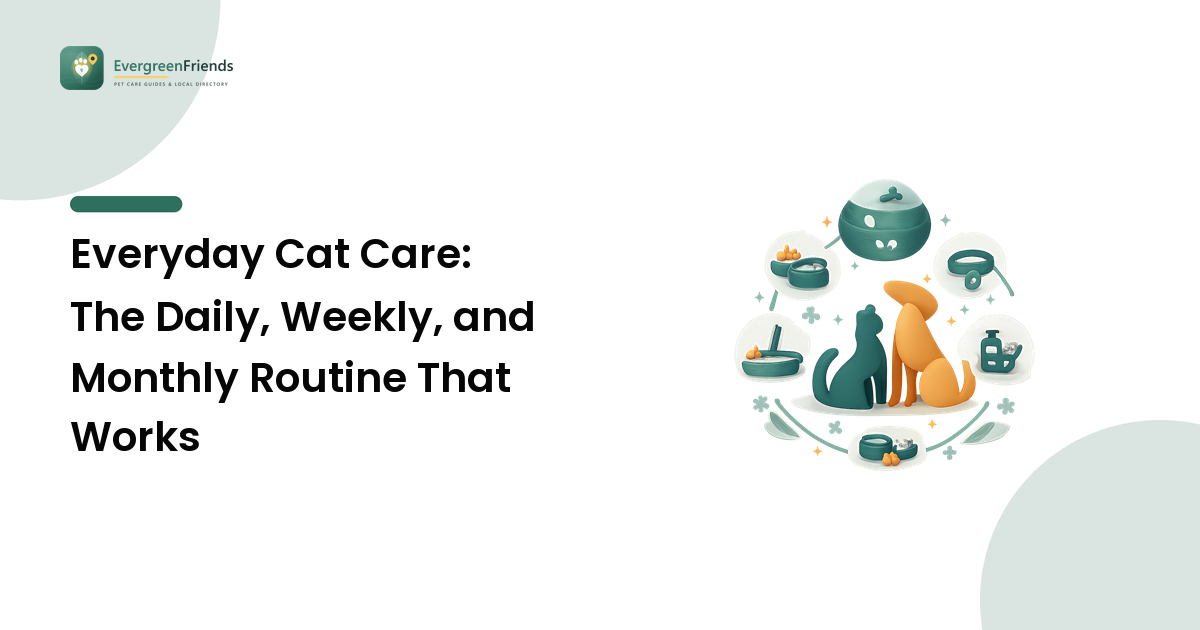
This guide lays out that rhythm in three layers — daily, weekly, and monthly — plus the seasonal extras, and, just as importantly, the clear line between what you handle at home and what belongs to your vet. One note before we start: everything here is general pet-care information, not veterinary advice. Amounts, foods, and schedules vary by age, weight, and health, so let your vet be the tie-breaker on the specifics — that's what the annual check-up is for.
The daily routine: the non-negotiables
Four things happen every single day. None of them takes more than a few minutes, and together they cover most of what keeps a cat well.
1. Fresh water, in more than one place
Cats are famously casual drinkers, which is partly why hydration matters. Empty, rinse, and refill the bowl daily — a quick wipe around the inside removes the film that puts fussy cats off. Many cats drink more readily from a wide, shallow bowl set away from their food (whiskers dislike deep, narrow rims), and some prefer running water from a fountain. Offer water in a couple of spots, especially in a larger home. If you ever notice your cat suddenly drinking far more or far less than usual for more than a day, mention it to your vet — a change in thirst is one of those quiet signals they want to hear about.
2. Meals at consistent times
Most adult cats do well on two measured meals a day; kittens typically need three or four smaller ones. The two rules that matter most are consistency and portion control. Measure the food rather than eyeballing it, and feed at roughly the same times — cats read the clock better than you do, and a predictable schedule cuts the dawn yowling far more reliably than an early breakfast ever will. Free-feeding a bowl of dry kibble all day is the single easiest way to end up with a heavier cat, because grazing hides how much is actually going in.
3. A clean litter box
Scoop at least once a day, every day — twice is better. Cats are fastidious, and a box that's below their standard is the most common reason a perfectly house-trained cat starts going elsewhere. Daily scooping also puts the litter box in front of you daily, which is exactly where you want it: changes in how often your cat goes, straining, or blood are things to raise with your vet promptly, and you'll only notice them if you're looking. More on box setup below.
4. Real play — not just a passing pat
This is the task owners skip, and it's the one that prevents the most trouble. A cat is a predator with a hunting instinct that doesn't switch off just because dinner arrives in a bowl. Ten to fifteen minutes of active play — a wand toy flicked like prey, a chase down the hallway — burns energy, keeps indoor cats trim, and heads off the boredom behaviours (over-grooming, furniture-shredding, 3 a.m. zoomies) that get blamed on temperament. Two short sessions beat one long one. End on a "catch" so the hunt resolves, and many cats will settle straight afterward.
The weekly layer: grooming and the health look
Once a week, spend a slightly longer session on upkeep and a calm head-to-tail check.
- Brushing. Short-haired cats benefit from a weekly brush; long-haired cats such as Persians and Maine Coons typically need a few minutes most days to stay tangle-free — matting is uncomfortable and, once it's tight to the skin, a job for a groomer or vet rather than home scissors. Regular brushing also means less shed hair around the house and fewer hairballs.
- The hands-on check. While brushing, run your hands over your cat. You're feeling for lumps, scabs, or sore spots, checking that eyes and nose are clean, that ears look pink and smell neutral, and that the coat is even. You're not diagnosing anything — you're learning your cat's normal so you can spot when something's off.
- Litter box wash-down. Beyond daily scooping, give the box a fuller top-up or change on a weekly rhythm, and wipe it out. Unscented litter is the safer default; many cats dislike heavy fragrances.
- A quick supplies glance. Note what's running low — food, litter — so a shopping gap never forces a sudden diet or litter switch, both of which cats notice.
The monthly and seasonal layer
Some tasks only need a monthly cadence, and a few shift with the seasons.
- Nail trims. Most indoor cats need their claws tipped roughly every few weeks. Take off only the sharp end, well clear of the pink quick, and pair it with a treat. A sturdy scratching post does a lot of the maintenance for you and protects your furniture — cats scratch to stretch and mark, not out of spite, so give them a legitimate target.
- Teeth. Dental health is easy to ignore and genuinely important. Home brushing with a cat-safe paste, introduced gently, helps; your vet checks the teeth at the annual visit and will advise on anything more.
- Weigh-ins. A monthly weight note catches slow creep — up or down — long before it's obvious by eye. Steady, unexplained weight change is worth a vet conversation.
- Parasite prevention. Keep flea, tick, and worming treatments on schedule per your vet's plan; some owners tie the reminder to the first of the month.
- Seasonal shifts. Cats often shed more heavily in spring and autumn, so brush more often then. In hot weather, watch water intake and keep cool shade available; in winter, an indoor cat may be more sedentary, which is another reason to keep play going year-round.
Indoor enrichment: the part that's easy to underrate
An indoor cat is safe from traffic and many diseases, and that safety is worth protecting — but a bare indoor life is understimulating for a hunter. Enrichment isn't a luxury; it's the difference between a content cat and a frustrated one. The building blocks are simple: vertical space to climb and survey from (a cat tree or a cleared shelf), scratching surfaces in the rooms the cat actually uses, a window view — ideally onto a bird feeder — and a rotation of small toys so novelty doesn't wear off. Puzzle feeders that make your cat work for a few kibbles turn eating into foraging, which is both mentally satisfying and a gentle brake on speed-eating. None of this needs to be expensive; a cardboard box and a paper bag entertain more cats than most gadgets.
Where home care stops and the vet begins
The whole point of a steady routine is that you learn your cat's normal, which makes the abnormal easy to spot. Drawing the line clearly: everyday feeding, litter, grooming, play, and weight tracking are yours. Anything that looks like illness is your vet's. Specifically, don't try to manage at home — call your vet — for a cat that stops eating or drinking, is straining in the litter box or not producing urine (an emergency in male cats especially), is vomiting repeatedly, hiding more than usual, breathing oddly, limping, or showing any sudden change in behaviour or appetite. Cats are experts at masking discomfort, so a subtle change often matters more than it looks. When in doubt, the answer is never a forum — it's a phone call. Keep your vet's number and an out-of-hours option somewhere you can find them fast.
If you're still setting up — new cat, new home — the routine above layers neatly on top of the first month; our guide to bringing home a new puppy or kitten covers those early weeks, and if you're weighing which cat suits your household, start with choosing a breed that fits your life. Dog in the house too? The companion everyday dog care routine follows the same daily–weekly–monthly shape.
Frequently asked questions
How often should I really clean the litter box?
Scoop daily at a minimum, ideally twice, and do a fuller change and wipe-out weekly. Cats are particular about cleanliness, and a box that's below standard is the most common reason a house-trained cat starts avoiding it. As a rule of thumb, provide one box per cat plus one spare, placed in quiet, low-traffic spots.
Do indoor cats really need daily play?
Yes. An indoor cat still carries a full hunting instinct, and without an outlet that energy turns into boredom behaviours — over-grooming, furniture-scratching, and those late-night sprints. Two short sessions of ten to fifteen minutes with a wand toy, ending on a "catch," do more for a calm household than almost anything else.
Should I feed wet food, dry food, or both?
There's no single right answer, and it depends on your cat's age, weight, and health — a conversation worth having at your annual check-up. Whatever you feed, measure portions rather than free-pouring kibble, keep meals consistent, and change foods gradually over about a week to avoid an upset stomach. Fresh water always matters, and it matters more for cats that eat mostly dry food.
My cat is grooming or scratching a lot — is that a problem?
Some grooming and scratching is completely normal. It becomes worth attention when it's sudden, excessive, or leaves bald patches, scabs, or raw skin. Because that can point to stress, parasites, or a skin issue, it's a general-information flag to raise with your vet rather than something to diagnose from an article.
How do I stop my cat waking me at 5 a.m.?
Usually it's a routine problem, not a stubbornness problem. A consistent evening play session that ends in a "catch," followed by the day's last meal, sends many cats into a satisfied sleep. Avoid rewarding the dawn wake-up with an early breakfast or attention, which simply teaches the alarm to keep ringing. Automatic feeders set for a pre-dawn portion can break the association entirely.
Cat care rewards consistency more than effort — a routine you'll still be keeping in February beats a burst of enthusiasm that fades by the weekend. For step-by-step care guides, honest cat and dog breed profiles, and plain-language explanations of the terms your vet uses, browse the everyday-care guides and cat breed profiles on Evergreen Friends.